Mary’s Fiat: Her “Yes” Means Much

The New Testament was written from the perspective of an ancient oriental people who understood God-given names to reveal something that is permanent about the nature or character of the one named. Isaiah 7:14—a prophetic text that speaks of the then-future Messiah—is just one example among many of the importance of names in the Old Testament:
Therefore the Lord himself will give you a sign. Behold, a [virgin] shall conceive and bear a son, and shall call his name Immanuel [emphasis added].
Isaiah 9:6-7 reveals multiple more “names” for the coming Messiah:
For to us a child is born, to us a son is given; and the government will be upon his shoulder, and his name shall be called “Wonderful Counselor, Mighty God, Everlasting Father, Prince of Peace [emphasis added].”
As an apologist, I have been asked the question many times, “Why didn’t Joseph and Mary name Jesus ‘Immanuel’ in fulfillment of Isaiah 7?” Our second text from Isaiah 9 helps supply the answer. The messiah was never intended to be addressed by all of these names. These “names” revealed the Christ was to be the Wonderful Counselor who brings the fullness of the revelation of God to all of humanity. He was to be “the Mighty God,” literally “God with us,” through the great mystery of the Incarnation. And he was to be both a Prince who brings peace and reconciliation with God while at the same time the “source” of creation—a “father” by analogy. In simple terms, the messiah was to be both God and man.
If these names were intended to be given names, it would have created a bit of a problem. Can you imagine Joseph and Mary raising Jesus with all those names? “Good morning, Immanuel, Wonderful Counselor, Mighty God, Everlasting Father, Prince of Peace!” The name “Jesus” certainly made conversation with the anointed one a lot easier!
And yet, to say that these “names” were to represent descriptions rather than appellations does not fully grasp what Scripture reveals, either. A description may represent something fleeting, whereas in the Bible a “name” reveals something that gets to one’s very core or essence: something permanent.
Perhaps the best example of this is found in God’s revelation of his own name in Exodus 3:14—I AM. Christians and Jews have understood for thousands of years this “name” to be much more than a mere title or even a description; it reveals volumes about God’s very nature. Through this name, God is revealed to be the one absolutely necessary being who alone does not receive his being from any other. There is no potentiality in him. He is pure actuality. He has no beginning and no end. He alone possesses all perfection. He is omnipotent, omnipresent, and omniscient. He simply IS WHO IS.
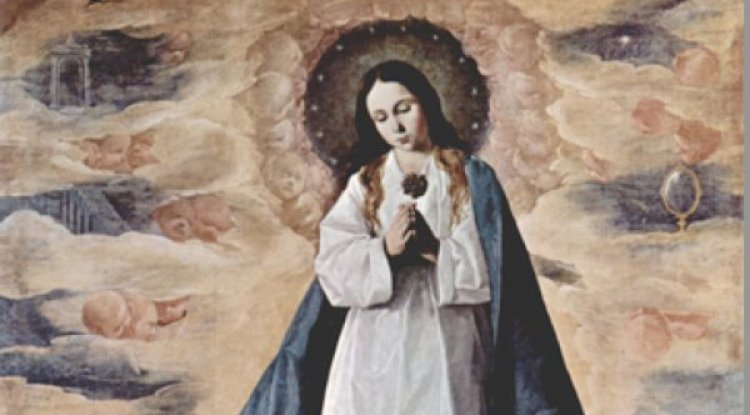
Thus, we see revealed through the ministry of the angel that Mary, the prophetic Mother of the Messiah, was not merely to be addressed as “full of grace” but rather was called by God to be “full of grace.” Having been named “full of grace,” Mary was and is for all-time free from all sin.
What's Your Reaction?